Piano Lessons in Houston
Our professional, experienced, and vetted piano teachers work with students of all ages and abilities in the Houston area. Inquire about scheduling today.
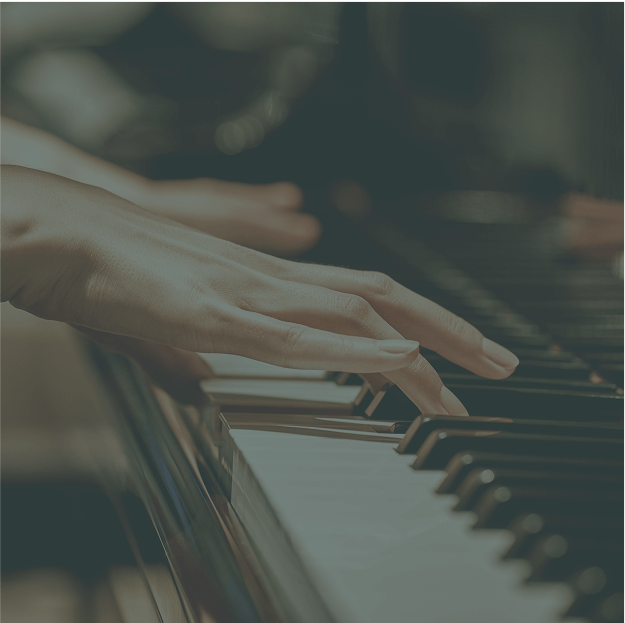
Piano Instruction In Your Home
Harmony Home Music offers private, in-home piano lessons throughout Houston. Students work one-on-one with experienced, background-checked instructors who teach directly in the home. Lessons are available for children, teens, and adults, and each program is shaped around the student’s goals, experience level, and schedule. Whether you are starting for the first time or returning after years away, our private in-home piano lessons will be the perfect fit for your musical goals and busy schedule.
We Work Around Your Schedule
In-home lessons remove one of the biggest barriers to consistency: the commute and difficulty of making it to your lesson. Your instructor arrives at a scheduled time each week and teaches on the instrument you already use.
This matters more than it seems. Students practice on the same piano they learn on, and parents can hear lessons and stay involved. And adults are more likely to stay consistent when lessons fit easily into their routine. For more information, get in touch.
Harmony Home’s mission is to provide exceptional in-home music lessons while demonstrating the love of Christ through our daily interactions with our students and their families.
Piano Lessons For Kids, Teens and Adults
Piano Lessons for Kids in Houston
Build Strong Fundamentals From the First Lesson
Young students begin with posture, hand shape, and basic coordination. Teachers introduce note reading, rhythm, and simple patterns that establish control as early as possible. Method books, such as Faber or Alfred, provide structure, but our lessons always include familiar songs so students stay engaged — we don’t rely purely on method materials.
We do not rush students through these early developmental stages to get to RCM, ABRSM, or other certifications faster than healthy. We focus on accuracy, comfort at the keyboard, and the ability to play with steady rhythm and clear notes.
Keep Students Engaged Without Losing Structure
Children respond best when lessons balance structure with variety. Our teachers use short exercises, rhythm activities, and simple creative tasks to keep attention focused. At the same time, every activity connects to real musical skills.
Students are not just playing games, although we do have fun in lessons! They are learning timing, note recognition, and coordination in a way that holds their interest.
Piano Lessons for Teens
Develop Independence at the Piano
Teen students benefit from taking ownership of their learning. Lessons start to move toward building mature practice habits, solving technical problems (like tricky arpeggios, tough contemporary music, and so forth), and making interpretative decisions on their own.
Some students focus on classical repertoire, while others want to play pop, film music, or arrangements they enjoy. Our teachers help students work through the music in a structured way that always leads to progress, but also takes their specific goals into account.
Prepare for Auditions and Performances
Many teens use piano for school programs, theater, or auditions. Lessons may include memorization strategies, performance preparation, and techniques for managing nerves.
Students learn how to prepare a piece to a finished level, not just play through it.
Piano Lessons for Adults in Houston
Start Piano or Return After Time Away
Adult students come in with very different backgrounds. Some are complete beginners, while others return after years away from the instrument. Lessons meet both groups where they are.
Beginners focus on reading, coordination, and basic technique. Returning students often rebuild skills quickly and move into repertoire they enjoy.
Learn With Clear, Practical Goals
Adults usually have specific goals. Some want to play for personal enjoyment. Others want to understand theory, learn chord progressions, or play in a church setting.
Lessons are structured around those goals. Progress is steady and expectations are realistic, and we can make your goals as ambitious as you would like.
“Our 6 year old is having so much fun learning with his instructor Cierra. She is incredibly patient and encouraging during their lessons together and he’s always eager to show her what he has been practicing the following week when she comes back!”
— Devin P.
You'll Love Your In-Home Piano Lessons
Beginner to Advanced: How Students Progress
Build Foundations as a Beginner
At the beginner level, students focus on reading music, counting rhythm, and coordinating both hands. Simple pieces and exercises build familiarity with the keyboard and establish good habits early.
Accuracy matters more than speed. Students learn to play carefully and avoid developing mistakes that are difficult to fix later.
Expand Skills at the Intermediate Level
Intermediate students begin working on scales, chords, and more complex pieces. Music becomes more expressive, and students start shaping phrases and controlling dynamics.
Repertoire may include sonatinas, early Romantic works, or simplified jazz pieces. At this stage, students begin to connect technical work directly to the music they play.
Refine Technique at the Advanced Level
Advanced students focus on tone control, voicing, pedaling, and interpretation. Repertoire may include Chopin nocturnes, Beethoven sonatas, or more complex contemporary works.
Lessons also address performance preparation, memory, and musical consistency.
What Students Learn in Piano Lessons
Connect Technique to Real Music
Students practice scales, arpeggios, and chord progressions as part of their regular work. These are not separate from repertoire. They are the patterns that appear inside the music.
When students recognize these patterns, they learn pieces faster and play them more reliably.
Strengthen Reading, Ear Training, and Theory
Reading skills improve through consistent exposure to new material. Ear training helps students recognize intervals, chords, and melodies. Basic theory explains how music is structured.
These elements are taught together, not in isolation, so students understand what they are playing.
Play Across Multiple Styles
Students can explore classical, pop, jazz, or worship music. Each style develops different skills.
Classical study builds precision and control. Jazz introduces rhythm and harmony. Pop and worship focus on chords, patterns, and accompaniment.
Lessons adjust based on what the student wants to play.
Build Practice Habits That Lead to Progress
Consistent practice matters more than long practice sessions. Students are encouraged to practice daily, even if only for a short time.
Effective practice includes slow work, repetition of difficult sections, and clear goals. Playing through a piece from beginning to end is not enough. Progress comes from identifying problems and solving them directly.
Why In-Home Piano Lessons Work
Learn on the Same Instrument Every Day
Students improve faster when they practice and take lessons on the same instrument. There is no adjustment period, and teachers can give advice based on the actual piano being used.
Make Lessons Fit Into Real Life
Families do not need to plan their day around travel. Adults can take lessons after work without adding another trip. This makes it easier to stay consistent over time.
Meet the Instructors
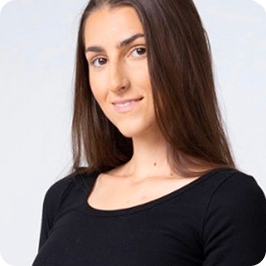
Jelena
Piano Instructor
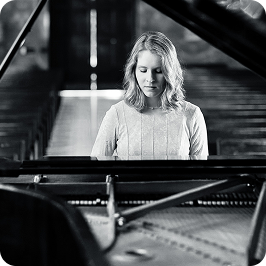
grace
Piano Instructor
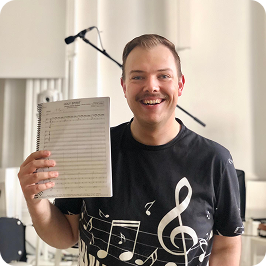
jonathan
Piano and Voice Instructor
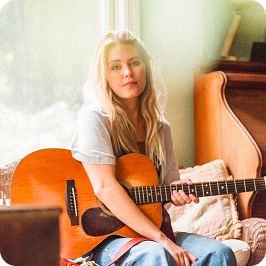
kimber
Piano, Voice, and Ukulele Instructor
Makayla
Piano, Guitar, and Voice Instructor
Eight years classically trained at the Maritime Conservatory of Performing Arts in Nova Scotia, Canada, Makayla works with children in all areas of voice training, guitar, piano and songwriting. With a background of being a professional singer/songwriter, Makayla began teaching for Shania Twain’s “Kids Can Foundation” in 2018 working with children in low-income families and has since taken on additional students. Her passion and expertise in music along with her love of sharing it with children make for a wonderful introduction to the world of music for your little ones.
Se Young Ko (Daniel)
Piano, Violin, and Composition Instructor
Se Young is a violinist, pianist, and composer who is based in Nashville, TN. He has received his Bachelor’s degree in Contemporary Writing & Production and Violin Performance from Berklee College of Music and his Master’s degree in Commercial Music at Belmont University. He is also a violinist and pianist experienced in many genres including classical, jazz, Brazilian/Latin, and has performed and recorded around the world. Se Young has worked with artists including Pablo Ziegler, Sunwoo Jung-a, Jung In, Berklee World Strings, Dear Jazz Orchestra, and many more. Se Young currently teaches at Belmont University as a professor in the school of music.
Phoebe
Voice and Songwriting Instructor
Phoebe is a professional vocalist and songwriter with over a decade of singing experience in both live and recorded settings. A graduate of Belmont University with a BA in Commercial Songwriting, she brings a deep understanding of both vocal artistry and songcraft to her teaching. Her lead and background vocals appear on recordings by Natalie Layne, Selah, Rachael Nemiroff, and many others.
Nic
Piano and Trumpet Instructor
Nic is a professional pianist who specializes in improvisation, with experience in jazz, classical, and contemporary styles. With a strong foundation in music theory and composition, Nic has performed for events at the Grand Ole Opry, the Country Music Hall of Fame, and the Schermerhorn Symphony Center. He has played with artists such as Brian Nathan, Daniel Arci, and Maddie in Good Company.
Grace
Piano Instructor
Grace is one of Harmony Home’s lovely piano instructors. Grace grew up in Minnesota and has taught piano for 10 years. From a young age, she led worship and was competing and winning statewide piano competitions! Grace graduated with a degree in Commercial Music, Arranging, and Composition. Currently, Grace leads worship at churches and is an accompanist for the school district in the Nashville/Franklin area. Grace recently released a single titled “Mercy is Mine.” She loves teaching kids and adults of any age/level and hopes to be an encouragement in their lives!
Abraham
Drum Instructor
Abraham is one of our awesome instructors at Harmony Home, teaching drums! Abraham has spent the last few years touring across the country, from Phoenix, AZ to Manchester, NH, playing drums and leading worship for people of all ages. He plays for several Christian music artists, promoting positive and uplifting environments, while spreading Good News and hope to all people. He has also helped lead worship at several youth camps, helping coach and lead youth to have fun and meaningful faith-based lives.
Ryan
Guitar Instructor
Hey! My name is Ryan and I’m the lead guitarist of a nationally touring band The Young Escape. We have written 3 number 1 songs and have played several major tours/venues that include The Wiltern in LA, the Moore Theater in Seattle, the Newport Music Hall in Columbus, and many more. I have years of live music and studio experience and can play in a wide variety of styles from pop to blues to funk to rock. My teaching focuses on giving guitar students a solid foundation for their skills so they have the tools to effectively express themselves on their instrument. My goal with my students is to get them excited to pick up their guitar every day.
Kimber
Piano, Voice, and Ukulele Instructor
Kimber is a songwriter, artist, worship leader, and studio session vocalist born right here in Nashville, TN. Beginning her musical journey at just 10 years old, she has had the opportunity to hone her skills and develop her artistry through many different experiences. Some of these experiences include singing and being interviewed on national television, performing a version of the Christmas classic “O Holy Night” that charted on Billboard Christian Airplay in 2018, being featured as a songwriter and/or vocalist in two motion pictures, writing with many up-and-coming and established recording artists, and leading worship at Belmont Church on Music Row for over a decade. She is passionate about writing both mainstream and Christian music that speaks of the radical love of Jesus Christ and his transformative power to bring hope and healing in any circumstance.
Emma
Piano, Bass, Guitar, Brass, and Ukulele Instructor
Emma is a musician and visual artist from Michigan. She has a Bachelor’s degree in Elementary Education from the University of Michigan – Ann Arbor and previously taught elementary school. Emma enjoys teaching piano, guitar, ukulele, and brass to students of all ages. She enjoys writing and recording her own music from home, and sharing what she has learned about being a maker with others.
Cierra
Voice, Ukulele, and Beginner Piano Instructor
Cierra is a skilled vocalist, music educator, and performer with a passion for helping students develop their musical talents in a supportive and encouraging environment. She holds a Master of Music in Commercial Voice Performance from Belmont University, where she graduated with a 3.98 GPA and received the prestigious Graduate Student Award. She also earned dual Bachelor’s degrees in Music Education and Vocal Performance from Marshall University. Cierra brings a wealth of teaching experience, having worked as a private instructor for several years, as well as serving as a graduate teaching assistant at Belmont University. Her background includes directing children’s choirs, coaching vocal ensembles, and leading worship music. In addition to her teaching, Cierra is an accomplished performer, having sung with the Nashville Symphony Orchestra Chorus and led the Americana/Appalachian folk trio, Cypress the Band.
Kris
Saxophone, Clarinet, Piano, and Voice Instructor
Kris is one of Harmony Home’s awesome instructors, teaching multiple instruments. Kris is a jazz & soul musician. He started playing when he was 9 years old and began playing professionally about 7 years ago. Kris studied jazz performance and composition at the University of Utah, and moved to Nashville to pursue a career in playing music and composing. We’re so glad to have Kris as part of the Harmony Home team!
Jelena
Piano Instructor
Jelena is a classically trained pianist, having played for 20 years and counting. She obtained her Bachelor’s degree in Music from Elmhurst University in Elmhurst Illinois, with her primary performance instrument being piano and secondary as voice. Additional expertise includes playing for the university jazz bands and soprano vocals in choir.
Jaron
Guitar and Piano Instructor
Jaron is a professional guitarist, producer, engineer, and worship leader. He holds a Bachelor’s in Commercial Guitar from Belmont University and has years of experience playing guitar and leading worship at a professional level. As a small business owner of his own production business, Jaron has been producing and mixing artists in Nashville for over 3 years. He has a deep passion for the creative process and seeing the next generation fall in love with music and creating art!
Colleen
Violin and Piano Instructor
Colleen is one of Harmony Home’s wonderful violin and piano instructors! Colleen has been playing the violin since she was 4 years old. She grew up in orchestra and learned classically. Colleen attended the Kentucky School of Bluegrass and Traditional Music for an associates in Audio Recording. Colleen is passionate about the ear for music and finding each individual’s passion for what they hear and incorporating it into their own personal lives.
Jack
Violin, Mandolin, and Viola Instructor
Jack is one of Harmony Home’s talented violin/fiddle instructors! Jack is from Bozeman, Montana and grew up playing the violin. He graduated from Belmont this past May with a degree in commercial music performance. Jack is currently a fiddle player in the Nashville area and plays with a variety of country, bluegrass, and jazz musicians.
Jonathan
Piano and Voice Instructor
Jonathan is a multi-instrument composer, arranger, vocalist, and music educator based out of Nashville, TN. From arranging and orchestrating projects for Grammy and Dove award-winning artists to designing for educational ensembles and churches across the United States. On any given day, his music can be heard on the marching band field, in churches, and in performance halls all across the country and arrangements of his music have been performed in five countries across Europe and have been translated into 4 languages. Jonathan resides in Nashville, TN where he is active in the music industry as a freelance arranger and private music instructor, and is the founder and editor of Stronger Music Company, an innovative educational publishing company that serves music educators across the United States.
Houston Piano Lessons FAQs
How often should piano lessons happen?
Most students take one lesson per week. This provides enough time to practice while keeping progress steady. Some advanced students may choose additional lessons.
Do I need a piano at home?
Yes. An acoustic piano is ideal, but a full-size digital keyboard with weighted keys works well for beginners. Your teacher can help you choose a suitable instrument.
What age is best to start piano lessons?
Many children are ready around age five, as long as they can focus for about 30 minutes and recognize basic patterns such as letters or numbers.
Can I learn multiple styles of music?
Yes. Lessons can include classical, jazz, pop, or other styles depending on your interests.
Are recitals required?
No. Performance opportunities are available, but participation is optional. Students can choose the level of involvement that fits their goals.